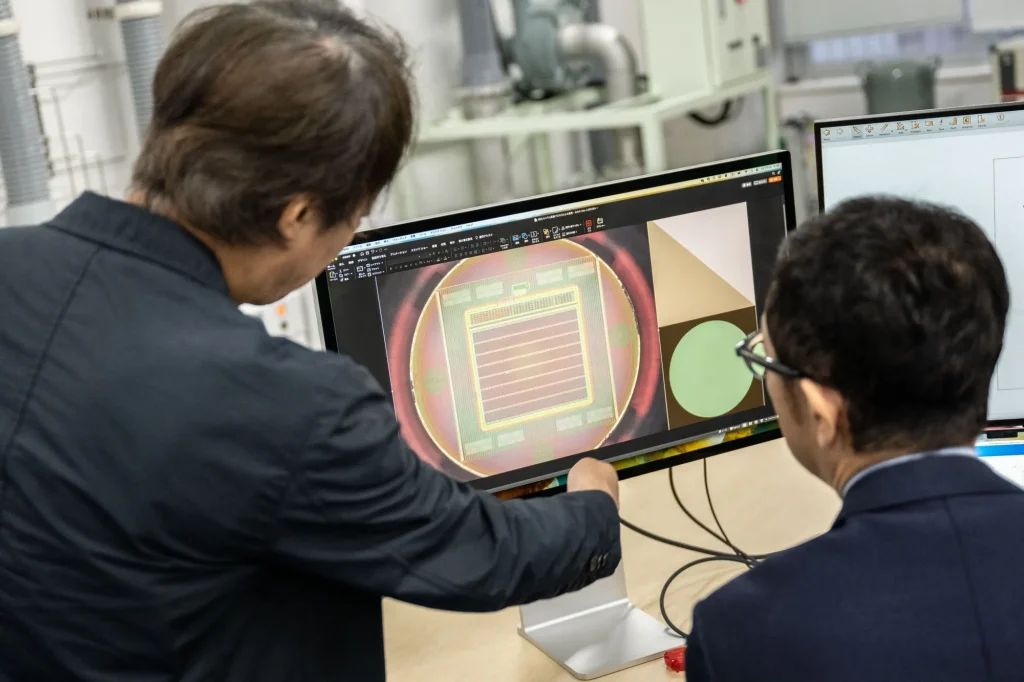
Upstream – Chip Design
The first stage of the semiconductor industry is chip design, where engineers plan how a chip will function before it is ever manufactured. Chips can be divided into two main types: logic chips and memory chips. Logic chips, like CPUs and AI processors, perform calculations and run software. Memory chips store information to help devices operate efficiently. Taiwan is home to world-class companies in both areas, including TSMC and UMC for logic chips and Nanya Technology and Winbond for memory chips.
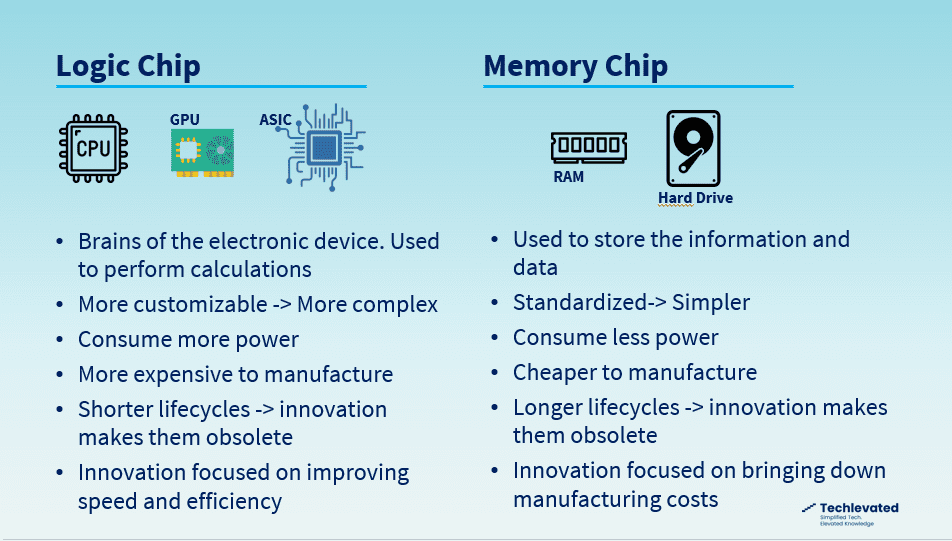
Picture from Techlevated.com
Design is a highly complex process.
Engineers must ensure the chip performs well, uses energy efficiently, and can work reliably in a variety of devices. Once the design is finished, it is sent to a wafer fabrication plant to be physically produced. From our interview with Dr. Han from Chun Yang Materials, we learned that even small materials used in the design stage, such as ePTFE membranes in storage and transport containers, play a critical role. These materials control airflow, prevent dust and moisture, and protect wafers throughout the supply chain. This showed us that chip design is not just about circuits—it also involves planning for the materials, handling, and protection needed to ensure success.