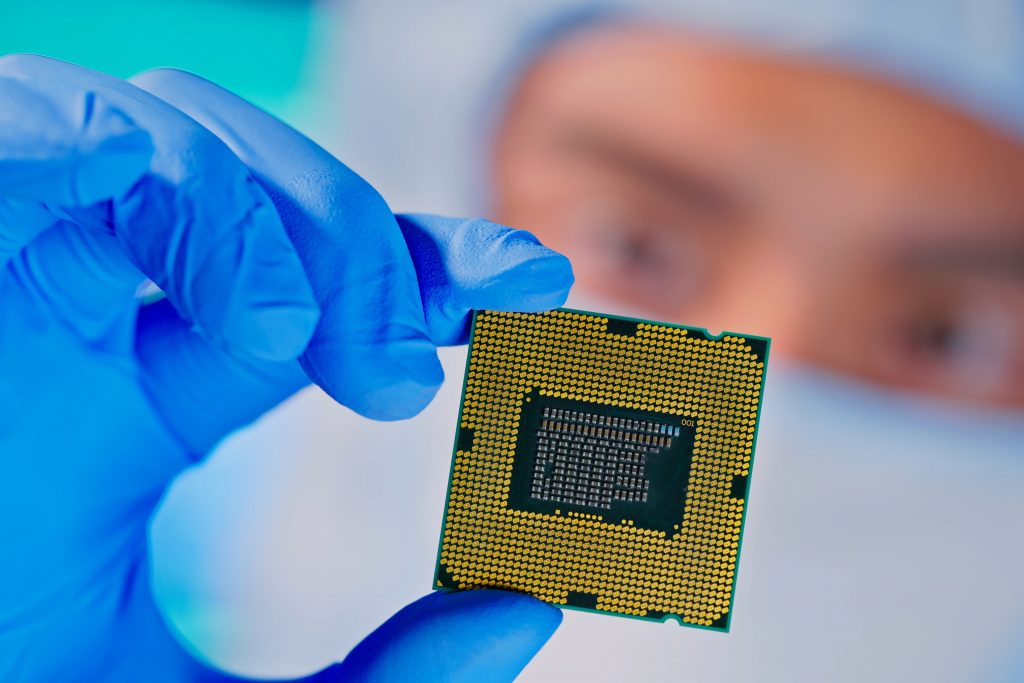
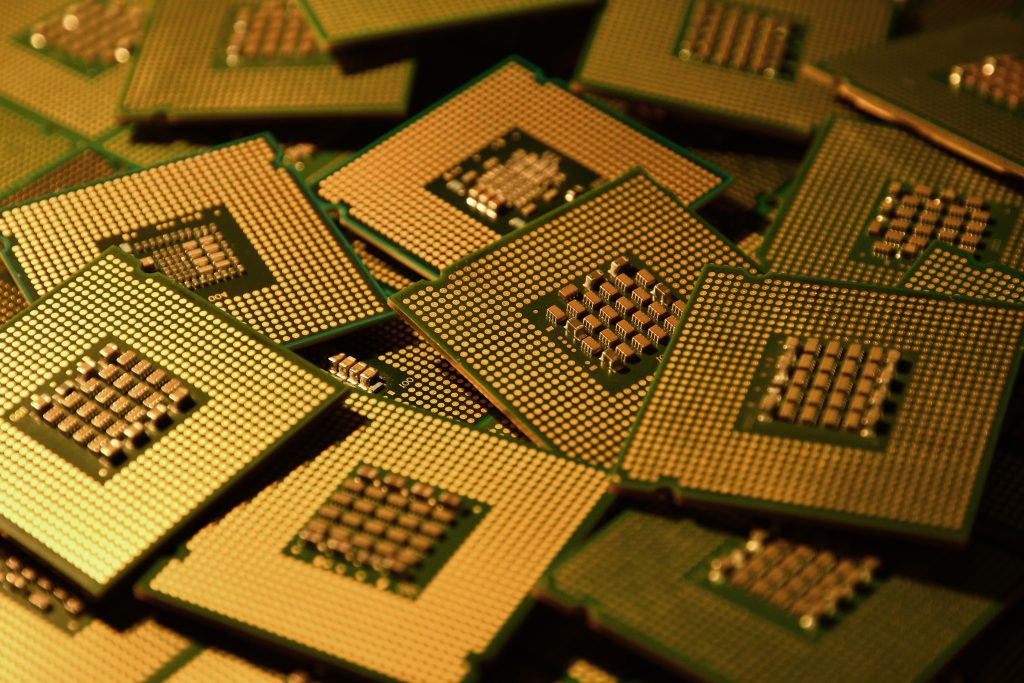
“Semiconductor enables the systems and products that we use to work, communicate, travel, entertain, harness energy, treat illness, make new scientific discovers, and more.”
— Semiconductor Industry Association
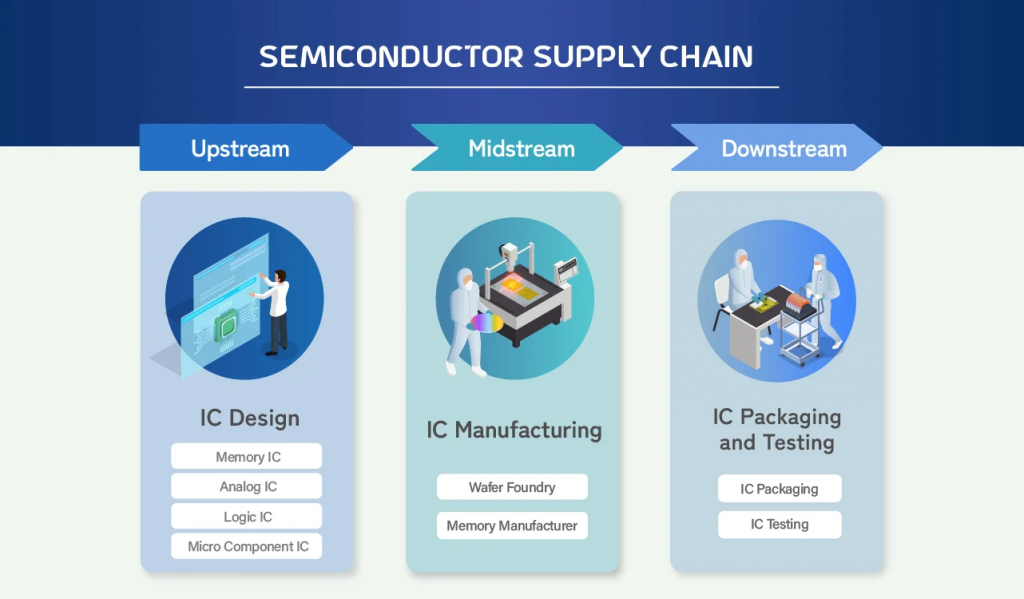
The Semiconductor Supply Chain
Upstream – Chip Design
The first stage of the semiconductor industry is chip design, where engineers plan how a chip will function before it is ever manufactured. Chips can be divided into two main types: logic chips and memory chips. Logic chips, like CPUs and AI processors, perform calculations and run software. Memory chips store information to help devices operate efficiently. Taiwan is home to world-class companies in both areas, including TSMC and UMC for logic chips and Nanya Technology and Winbond for memory chips.
Midstream – Wafer Manufacturing
After design, chips move to wafer manufacturing, also called fabrication. This stage builds the circuits on silicon wafers through many precise steps, including photolithography, etching, chemical vapor deposition (CVD), physical vapor deposition (PVD), and chemical mechanical polishing (CMP). These steps are repeated dozens or even hundreds of times to create multilayer circuits.
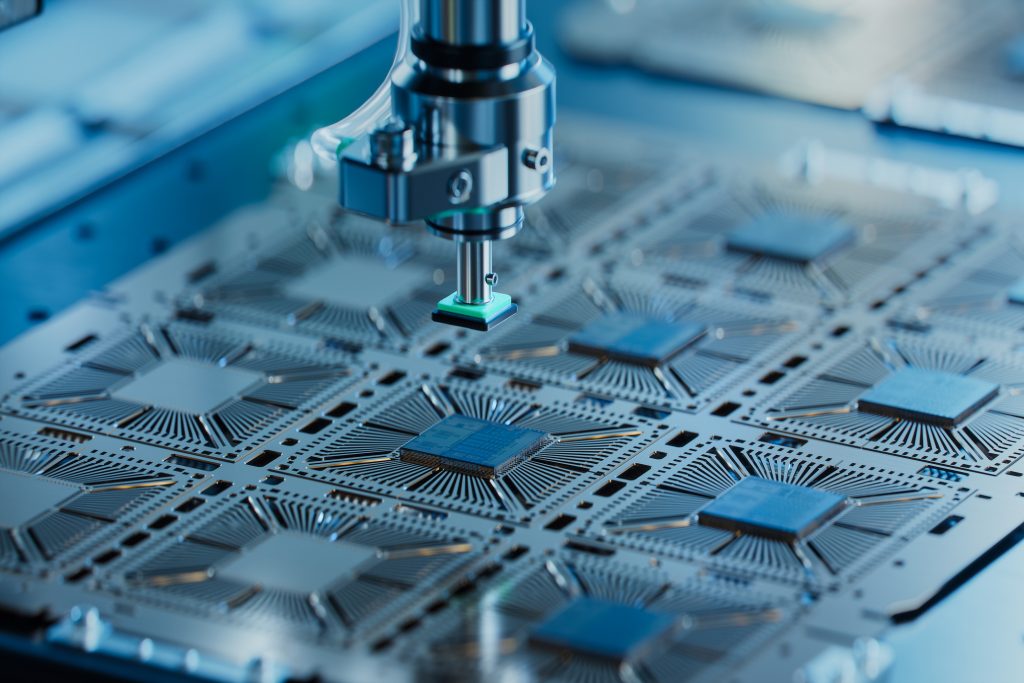
Downstream – Packaging & Testing
After wafers are manufactured, they move to packaging and testing, which ensures chips are reliable and ready for use. Packaging protects chips from moisture, dust, and static electricity and allows them to connect to electronic devices. As Dr. Yuan explained, packaging is like “building a house for the chip,” providing safety and stability for everyday use in phones, laptops, AI systems, and medical equipment.